
Site-specific planning
We consider access points, public and permissive routes, neighbouring land, buildings, livestock, terrain and the activity taking place on the site.
Safe deer management
Every decision—from access and deer identification to a possible shot—is approached with safety, welfare and responsible practice in mind.
Our commitment
Giving permission for deer management on your land is a significant decision. We understand the need for reassurance around public access, livestock, neighbouring properties, footpaths and day-to-day farming or forestry operations. Our work is planned around the particular risks and characteristics of each site.
Safety principles
We consider access points, public and permissive routes, neighbouring land, buildings, livestock, terrain and the activity taking place on the site.
Deer must be properly identified by species and sex where relevant. No action is taken unless the animal and the full shooting situation are clear.
We assess distance, conditions, backdrop and what lies beyond the intended target. A shot is taken only where it can be made safely and humanely.
Qualifications

All of our stalkers are either Deer Stalking Certificate Level 1 (DSC1) or Proficient Deer Stalking Certificate Level 1 (PDS1) and basic first-aid qualified as a minimum. DSC1 and PDS1 establish a foundation of knowledge and practical competence for ethical, humane and safe wild deer management.
These qualifications cover the knowledge and assessed skills needed to approach deer management responsibly—not simply rifle use, but the wider legal, ecological, welfare and food-safety context. PDS1 is the only Level 1 course to confer Trained Hunter status, with full LANTRA and UKRS accreditation.
Understanding life cycles, habitat requirements and behaviour of the UK’s wild deer species.
Awareness of relevant law and the ability to identify deer species and sex accurately.
Safe rifle handling, sound judgement in shooting scenarios and consistent shooting competence.
Humane practice, carcass inspection, hygienic handling and knowledge relevant to the supply of venison.
Equipment
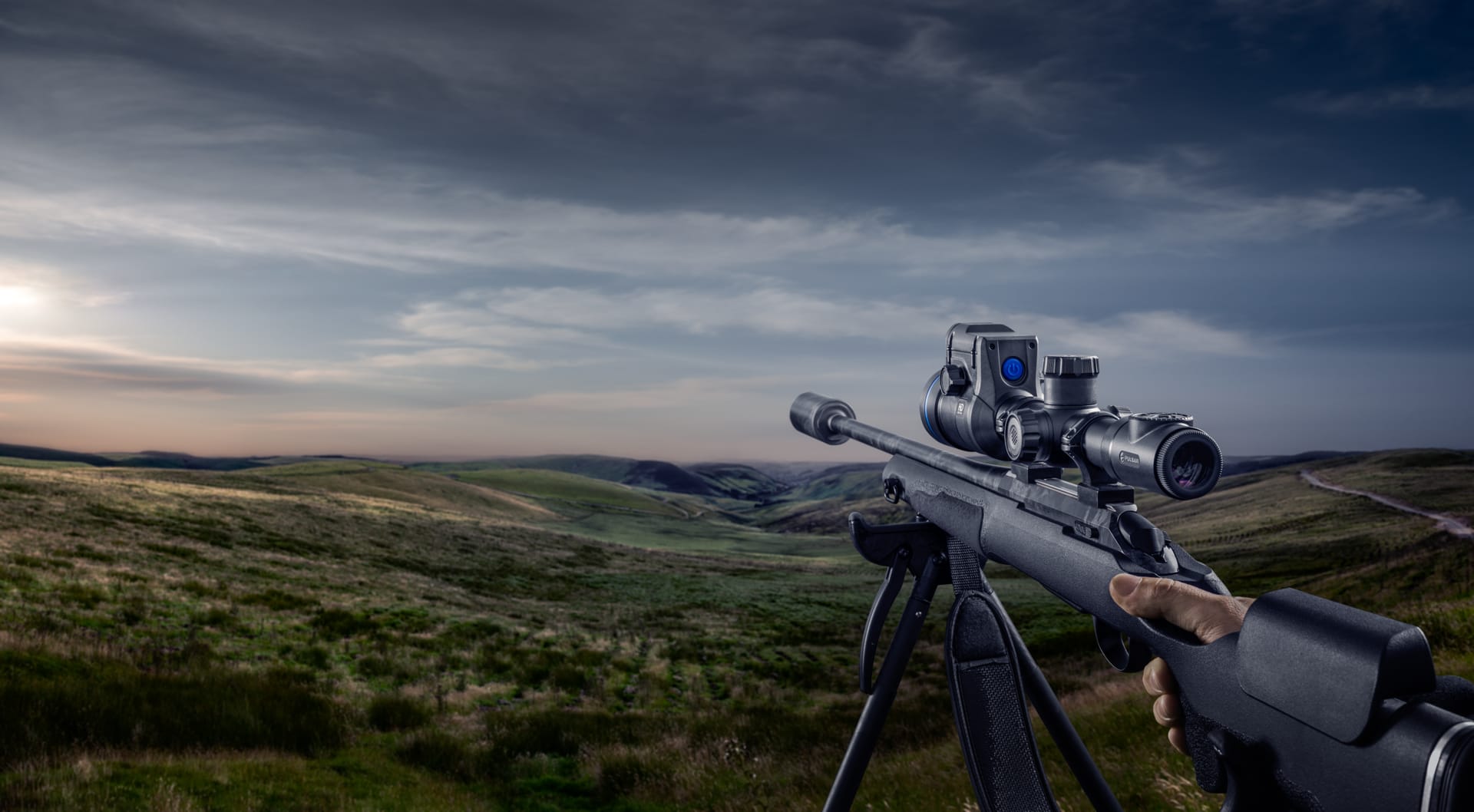
Equipment does not replace sound judgement or experience. It helps us assess a situation properly, communicate clearly and work safely, particularly on unfamiliar land or where visibility and access need careful management.
Used to assist observation of deer and to improve awareness of other heat sources in the area before any decision is made.
High-quality binoculars and spotting equipment support accurate observation and positive identification at appropriate distances.
Help establish distance and support sound, conservative decisions about whether a safe and humane shot is possible.
Used to understand boundaries, terrain, routes and location—particularly helpful when working across unfamiliar areas.
Where mobile coverage is poor or team coordination is required, communications equipment helps maintain contact and awareness.
Members carry appropriate basic first-aid equipment, and high-visibility clothing is used to support safe team working.
Working on your land
Before any arrangement begins, we discuss how the land is used and agree a way of working that reflects its particular needs. This may include farm operations, forestry work, public rights of way, sporting activity, tenants, neighbours and seasonal access patterns.