
Ethical practice
Every outing is conducted lawfully, safely and with animal welfare at the centre of every decision.
Deer surveys and management
We support landowners with deer management—from baseline surveys, species management plan preparation and CWS1 deer-management grant applications to agreed population management, habitat-impact assessments, evidence records and the installation of required deer-monitoring structures (exclosures).
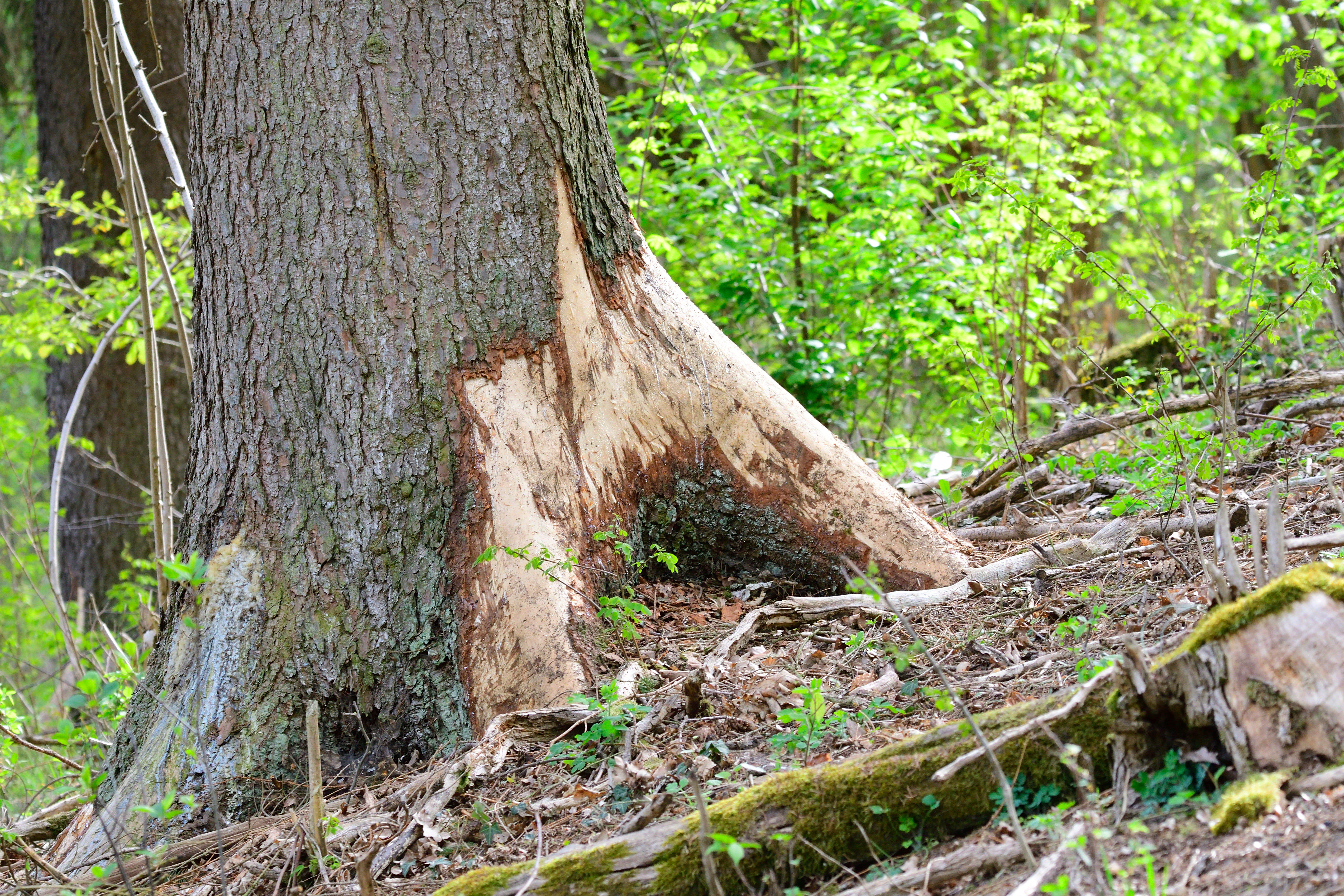
Our approach
We assess deer impacts, carry out deer surveys, prepare management plans, support grant applications and coordinate our qualified deer stalkers.
We agree objectives, maintain stalking and cull records, provide equipment and report progress. Our work keeps deer numbers at levels the land can support, protecting woodland regeneration, crops and habitats.
Stalking is carried out recreationally by our qualified deer stalkers under their own insurance. We manage the planning, records and coordination.
Every outing is conducted lawfully, safely and with animal welfare at the centre of every decision.
We respond to the individual needs of farms, woodland and conservation sites—not arbitrary targets.
Our objective is resilient habitats and healthy deer populations for the years ahead.
For landowners
Explore how we work, the safety measures we put in place, grant funding, statutory open seasons and answers to common landowner questions.
Professional deer stalking, deer control, surveys and practical support for farms, estates and woodland.
02The ecological, commercial and practical reasons for responsible deer management.
03Support with deer-impact surveys, CWS1 applications, management delivery and monitoring.
04Qualifications, planning, equipment and a safety-first approach in the field.
05A clear reference to statutory deer open-season dates across the UK.
06Answers to common questions from landowners considering deer-management arrangements.
Know the species
Britain’s six free-ranging deer species differ in behaviour, habitat use and the impacts they can have.
See the dedicated open seasons page for statutory seasonal information for England, Wales, Scotland and Northern Ireland.
Hover over a deer image for an in-depth profile. On mobile, tap a card; tap elsewhere or press Escape to close it.
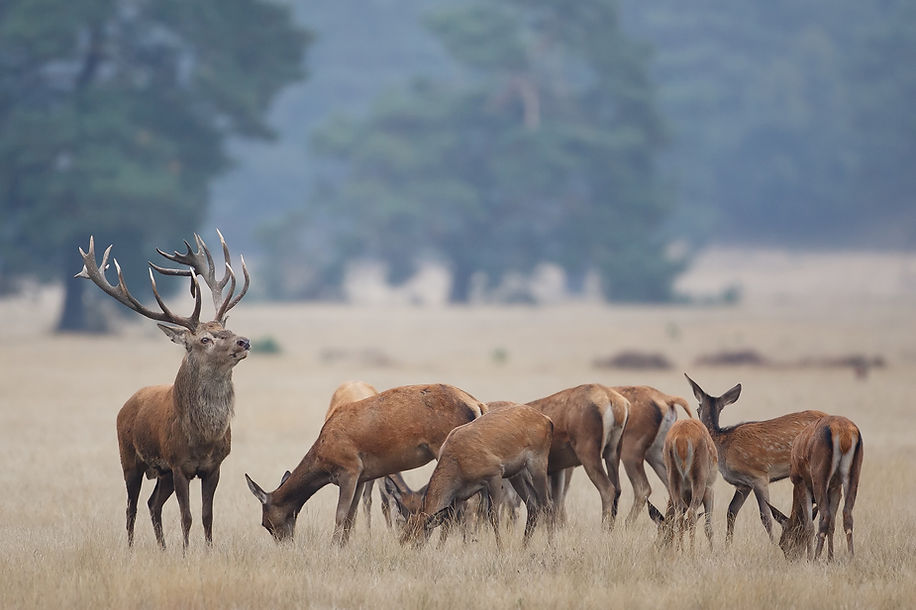
Britain’s largest land mammal and a generally herd-living species.
Hover for species profileCervus elaphus
Potential land impacts At high density, heavy browsing can prevent woodland regeneration; grazing may affect heaths, grasslands and moorland; bark stripping and fraying can damage young trees. Their large body size and movement also make road-collision risk significant.
Move away, click/tap again, or press Escape to close.
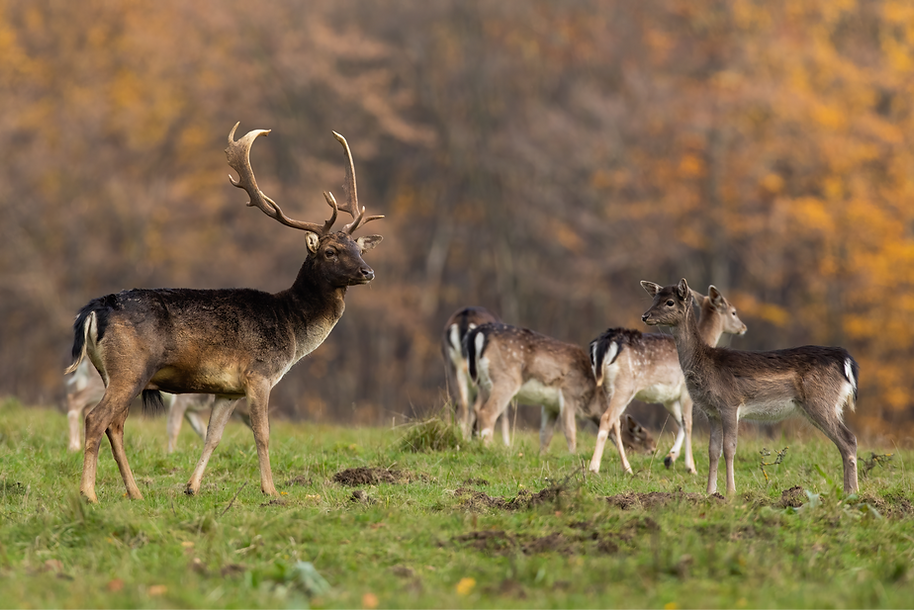
An adaptable, social deer often found in groups across farm and woodland landscapes.
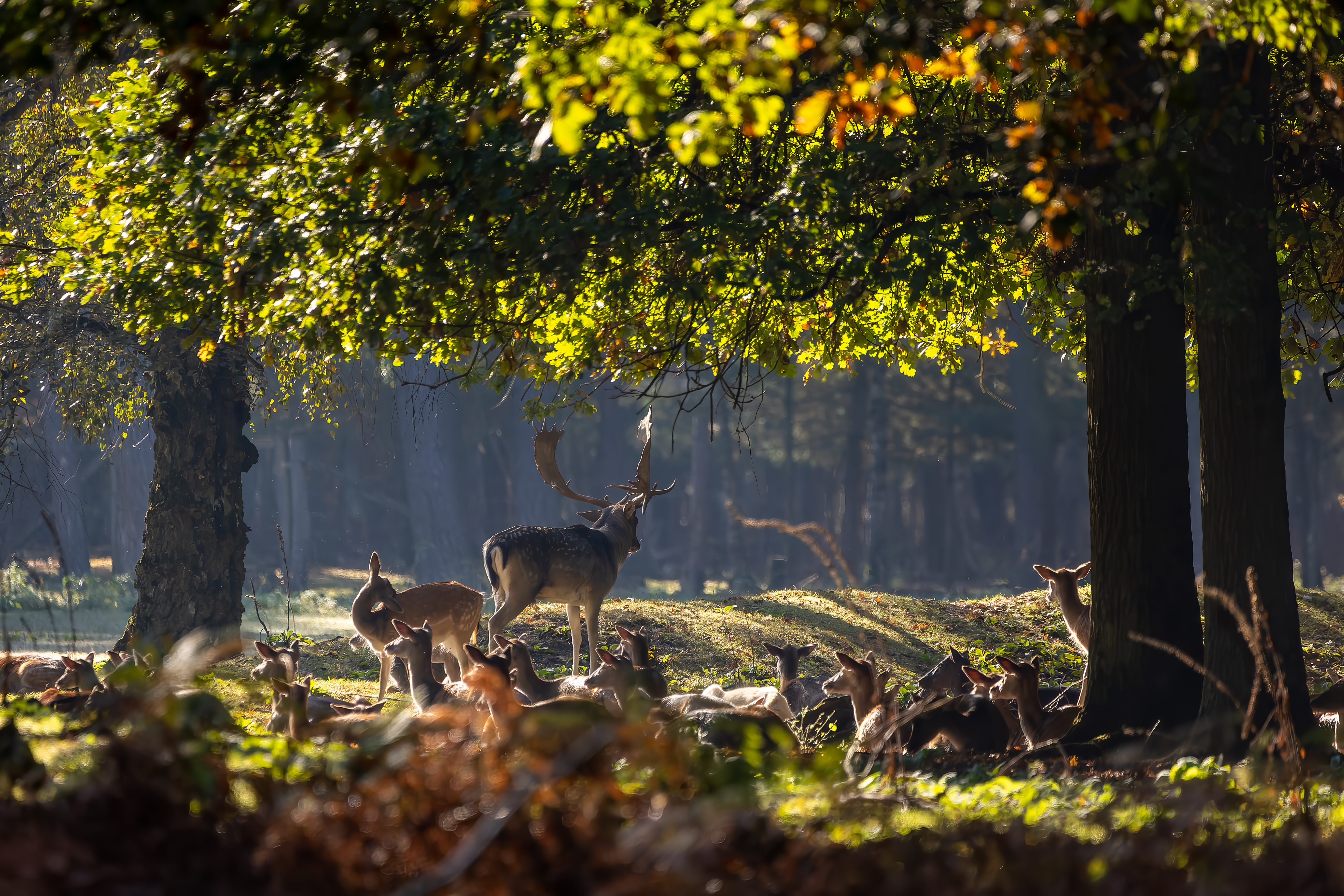
Hover for species profileDama dama
Potential land impacts Herds can cause concentrated grazing and browsing pressure in woodland and on farmland. They may browse young trees, damage crops—including root crops locally—trample fields, and contribute to deer–vehicle collisions.
Move away, click/tap again, or press Escape to close.
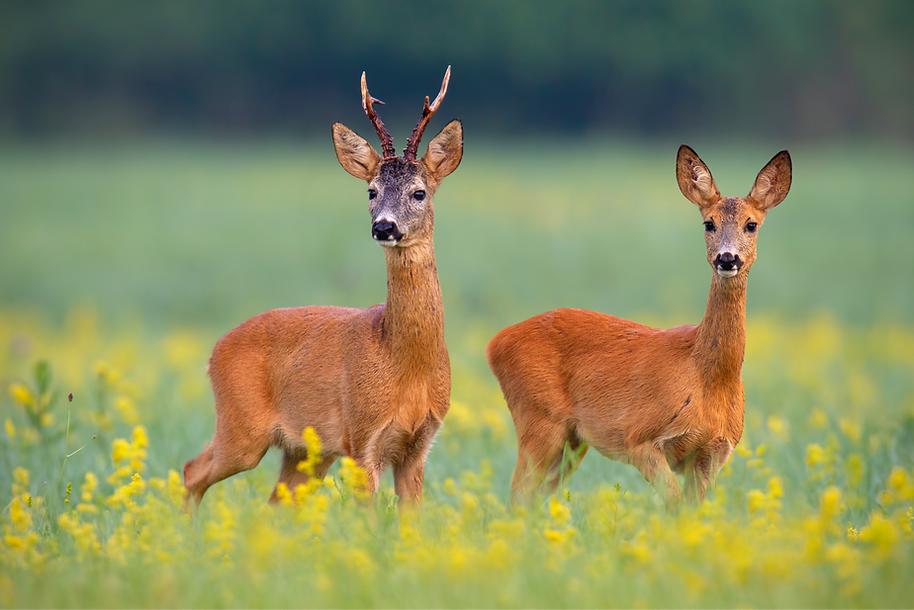
A small, elegant and usually solitary deer of woodland edges and farmland.
Hover for species profileCapreolus capreolus
Potential land impacts Roe selectively browse highly palatable shoots, buds and coppice regrowth. This can deform or suppress young trees, reduce successful establishment of planting and natural regeneration, and cause crop or garden damage near cover.
Move away, click/tap again, or press Escape to close.
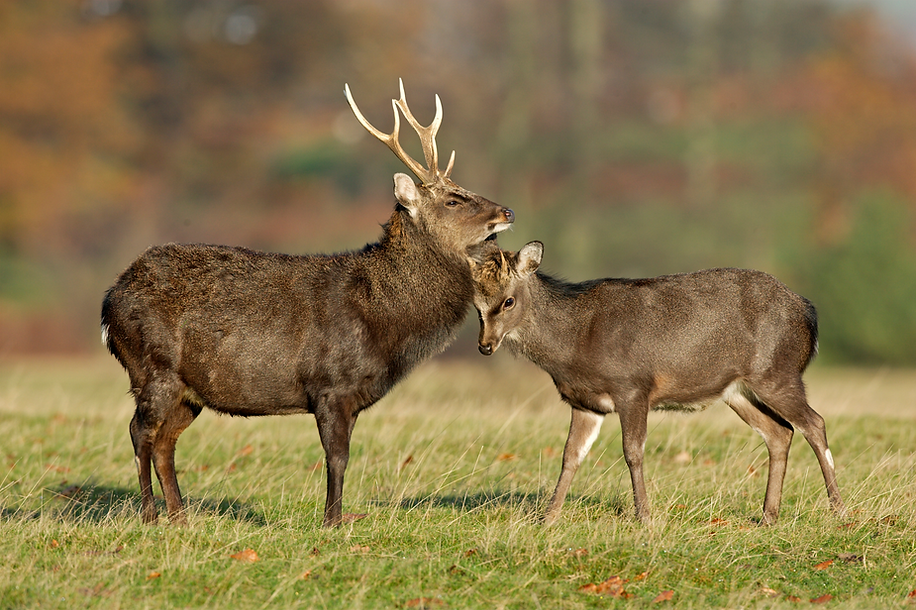
A medium-sized deer that may be solitary or occur in small groups.
Hover for species profileCervus nippon
Potential land impacts Sika can be particularly damaging in forestry: bark stripping can girdle stems, introduce decay and reduce timber quality; browsing can suppress regeneration. Where sika overlap red deer, hybridisation may also threaten red-deer genetic integrity.
Move away, click/tap again, or press Escape to close.
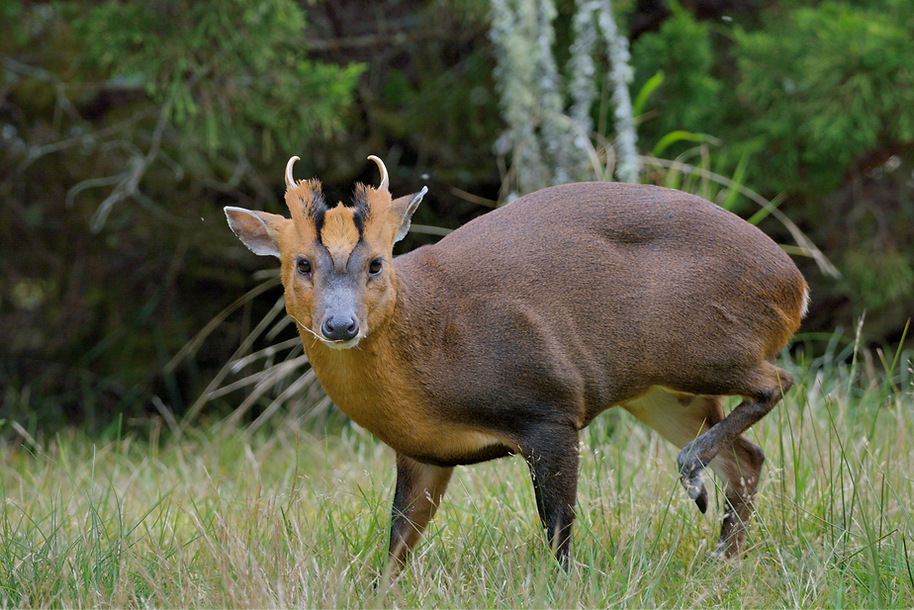
A small, secretive species with a distinctive hunched silhouette.
Hover for species profileMuntiacus reevesi
Potential land impacts Year-round breeding and persistent low-level browsing can remove woodland understorey, coppice shoots and ground flora. This may impede regeneration, damage gardens and crops, and alter cover used by woodland plants and low-nesting birds. Muntjac can also pass through some deer fences.
Move away, click/tap again, or press Escape to close.
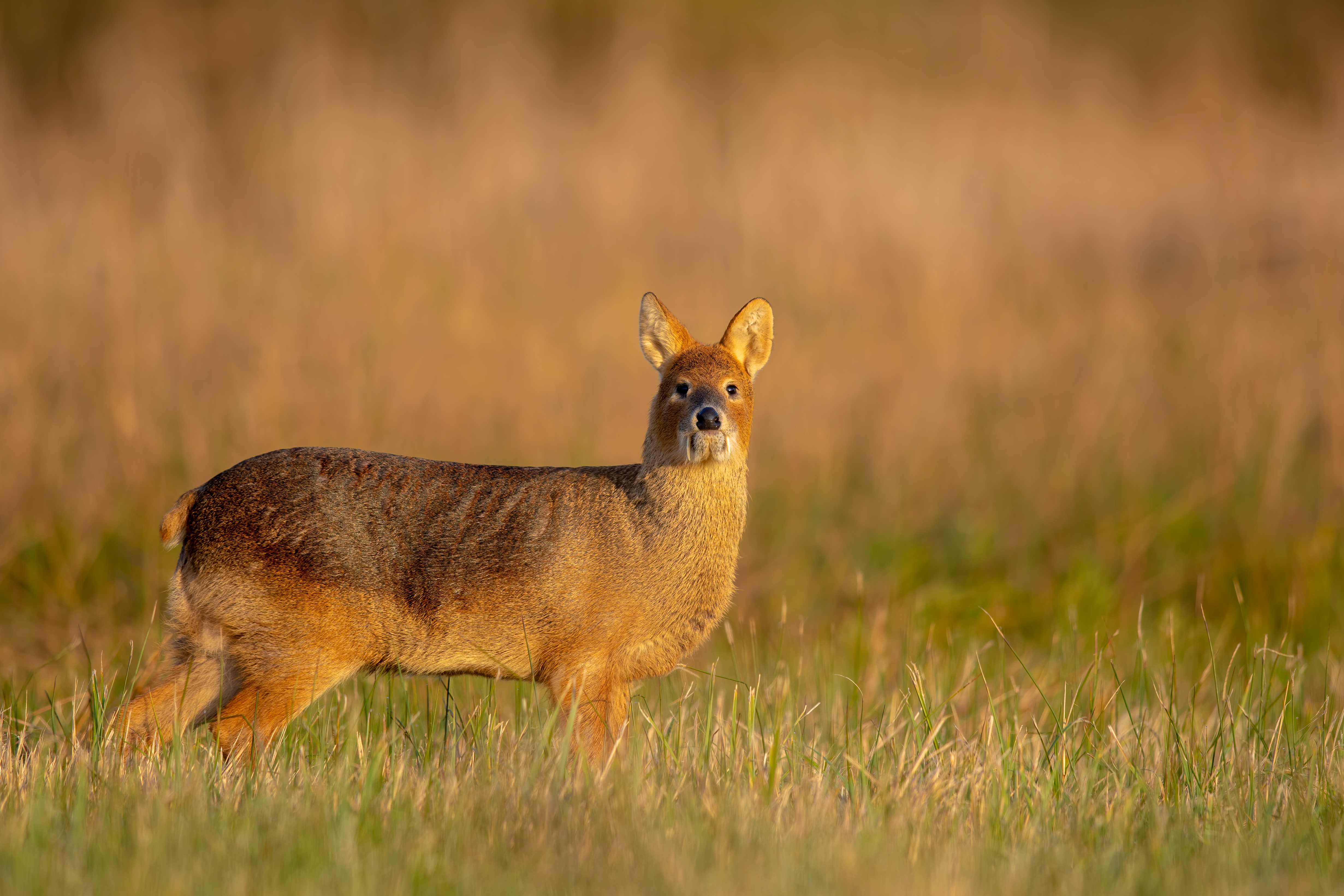
A stocky, mainly solitary deer associated with wetlands and lowland cover.
Hover for species profileHydropotes inermis
Potential land impacts Localised grazing and browsing can affect arable crops, field margins, wetland-edge vegetation and new planting. Their impact is most relevant where lowland cover and intensive farming meet; site assessment should distinguish their activity from other deer.
Move away, click/tap again, or press Escape to close.
Guided outings
We prioritise the health and sustainability of the local deer population, retaining good breeding stock while supporting the agreed management objectives for the land.
Where there is sufficient stock, the management plan permits it and the landowner has expressly agreed, we can offer a limited number of guided outings.
Each outing forms part of an agreed deer-management programme. The income generated helps support the conservation work and practical management needed to maintain healthy deer populations and the land on which they depend.
Please contact us if you would like information about our guided outings.
Work with us
Whether you are a landowner, forester, land agent or manager, we would be pleased to have an informal discussion about working together.
Tell us a little about your land, what you are looking for and the specific questions you have. We will respond as soon as possible.
Get in touch